
There’s a quiet moment many women know well—the pause between responsibilities when you suddenly wonder why your life feels so full, yet your personal goals keep slipping to the side. You have dreams you care about, habits you want to build, routines you’d love to maintain, but your days are already packed. Between work, relationships, family needs, and the constant background pressure of trying to “keep it all together,” goal setting often feels like one more task you don’t have the energy for.
And when you do try to set goals, it can be discouraging to watch them fade after a week or two. Not because you don’t want change, but because traditional goal-setting methods rarely consider what it’s like to manage a busy, demanding life. They expect perfection. They expect long hours. They expect a version of you who has unlimited time and motivation—which isn’t realistic for most women today.
But goal setting doesn’t have to feel overwhelming or rigid. It can be simple, supportive, and deeply aligned with your everyday life. This article will show you how to create goals that actually stick, not through pressure, but through clarity, compassion, and small steps that work even on your busiest days.
Why Goal Setting Feels Hard When Your Life Is Already Full
For many young women, especially those balancing work, family, personal expectations, and the constant pressure to “keep up,” goal setting doesn’t feel empowering at first—it feels like one more responsibility piled onto an already overflowing plate. You wake up with a to-do list in your mind before you even get out of bed. You move through your day carrying mental tabs open in every direction: deadlines, messages you haven’t replied to, plans you keep postponing, and the quiet desires you’ve pushed to the back because life hasn’t left enough room for them yet.
In that kind of reality, trying to sit down and plan goals can feel almost unrealistic. Your brain is tired. Your emotional energy is stretched thin. And even when you want to grow, you can feel weighed down by the fear of adding another commitment you might not have the bandwidth to maintain. It’s not that you’re incapable of sticking to goals—it’s that your life is already running at full speed, and traditional advice rarely acknowledges that truth.
Another layer of difficulty comes from the emotional background noise of modern life. Social media constantly shows you people who seem to do everything effortlessly—perfect routines, perfect progress, perfect discipline. It creates a quiet, damaging comparison where you feel like your effort has to look a certain way to matter. But real life isn’t staged, filtered, or structured in aesthetic blocks of time. Real life is messy, unpredictable, and full of sudden shifts that make rigid goals crumble.
So when you try to set goals in this environment, your mind naturally resists. Not because you lack ambition, but because you’re protecting yourself from another source of pressure. Your brain wants relief, not another project.
Understanding this opens a door: goal setting doesn’t work when it feels heavy. It works when it feels supportive—when it gives your life more ease, not more noise. Once you see that the problem isn’t you but the unrealistic way goals are often framed, you can finally build goals that fit your real life, not a perfectly organized fantasy version of it.

The Hidden Reasons Goals Don’t Stick for Busy Women
When goals slip through your fingers, it’s easy to assume you lack discipline or motivation. But the real reasons are far more human, and far more compassionate. For busy women navigating work, relationships, personal responsibilities, and emotional labor, most goals fail not because of a lack of commitment—but because the structure around them is unrealistic from the start. Your life has layers, and any goal that ignores those layers will feel impossible to maintain.
One major reason goals don’t stick is that they’re often built on pressure instead of purpose. Many women set goals because they feel they should—to match what peers are doing, to live up to family expectations, to keep pace with social media, or to meet standards that were never truly their own. A goal without a personal connection drains energy instead of giving it. When life gets busy, it’s always the first thing to fall away.
Another hidden challenge is that goals are usually designed too large, too fast. You set a goal with enthusiasm, but the moment real life intervenes—fatigue, long workdays, emotional ups and downs—the goal suddenly feels too heavy. When a goal requires perfect conditions, one rough week can derail it completely. And when you fall behind, the guilt makes it harder to start again.
There’s also the reality of mental overload. Busy women carry enormous invisible workloads: remembering appointments, managing home responsibilities, worrying about the future, caring for others. When your brain is already juggling so much, adding a big new goal without simplifying your approach becomes overwhelming. It’s not a lack of ambition; it’s cognitive capacity.
Finally, many goals fail because they’re not designed with flexibility. Life changes. Energy fluctuates. Seasons shift. Goals that don’t bend will break.
Understanding these deeper reasons isn’t an excuse—it’s a relief. It reminds you that you’re not the problem. The system is. And once you build goals that honor your real life instead of fighting it, consistency becomes natural, sustainable, and deeply empowering.
The Psychology of Simplicity: Why Small Steps Work Better
The human brain is wired to favor clarity, predictability, and rewards that feel achievable. When a goal is simple and broken into small steps, your mind immediately interprets it as something safe and doable. This creates a psychological opening—your internal resistance quiets down, motivation rises, and taking action feels less like a burden and more like a natural part of your day. Simplicity isn’t about lowering your standards; it’s about working with your biology instead of against it.
Big, complicated goals trigger the opposite reaction. When the brain senses overwhelm, it activates a protective response: hesitation, procrastination, avoidance. Not because you don’t care, but because the goal feels like a threat to your already limited energy. This is why many women feel stuck even when their intentions are strong. Their goals are simply too large for the bandwidth they realistically have.
Small steps trigger momentum. Every time you complete a tiny action, your brain releases a small hit of dopamine—the neurotransmitter that signals progress and satisfaction. This reward builds confidence and encourages repetition. Over time, these micro-wins create a powerful internal shift. You begin to trust yourself more. You begin to believe that consistency is possible. And you start forming an identity around being someone who follows through.
Simplicity also reduces decision fatigue. When your goal is clear and your next step is tiny, you don’t waste mental energy figuring out what to do. You just do it. This smooths out your progress and makes your goal feel like part of your routine rather than an extra task competing for attention.
This is the psychology behind goals that stick: small, clear, aligned steps that honor both your mind and the busy rhythm of your life.
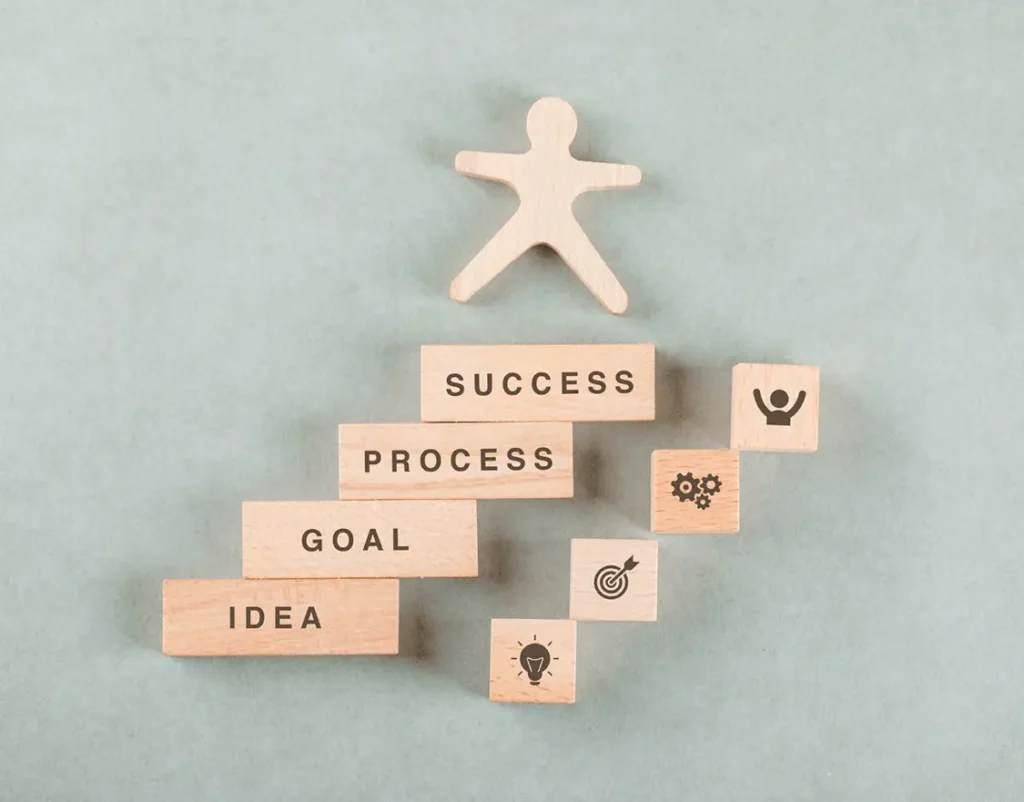
A Step-by-Step Goal-Setting System Designed for Real Life
If you’re a busy woman with limited time and a full plate, your goal-setting system must be simple enough to fit into real life—not the ideal life you wish you had. This step-by-step method is designed to strip away the unnecessary pressure and give you a clear, grounded path you can follow—even on your most chaotic weeks.
Step 1: Choose One Priority for This Season
Instead of aiming for multiple big improvements at once, ask yourself: What is the one area of my life that would feel lighter, calmer, or more stable if I improved it just a little? This single choice becomes your anchor. When everything else gets noisy, you return to this one intention.
Step 2: Define the Smallest Clear Goal Within That Area
Clarity reduces overwhelm. Instead of “get organized,” choose something tangible like “declutter my desk for five minutes a day.” Instead of “get healthier,” choose “take a 15-minute walk after work.” The smaller and clearer your starting point, the stronger your consistency will be.
Step 3: Break It Into Micro-Actions You Can Do in 5 Minutes
Micro-actions bypass excuses. They meet you where you are physically and emotionally. These tiny steps train your brain to start—because starting is always the hardest part.
Step 4: Build a Flexible Routine Instead of a Perfect One
Perfection collapses the moment life gets messy. Flexibility keeps you in motion. Create two versions of your goal: your “ideal day” version and your “busy day” version. This prevents the all-or-nothing patterns that derail progress.
Step 5: Create One Emotional Reason That Anchors You
Write a single sentence explaining why this goal matters. When motivation weakens, reconnecting with this personal meaning gives you the emotional fuel to keep going.
This system doesn’t demand discipline you don’t have—it builds consistency from the rhythm of your actual life.
Staying Motivated When Your Schedule Gets Crowded
Staying motivated isn’t about maintaining constant energy—it’s about creating a system that supports you even when life is stretched thin. Busy women often expect themselves to stay driven in every season, but real motivation rises and falls with your workload, your emotions, and the demands around you. The key is learning how to stay connected to your goal even when things get hectic, without slipping into guilt or perfectionism.
One of the most powerful strategies is to lower the barrier to entry. When your day is packed, it’s easy to think, “I don’t have time for my goal today.” Instead, create a version of your goal so small that it fits into the tiniest gap of your schedule—five minutes, two minutes, or even one minute. The goal isn’t intensity; it’s continuity. When you keep the thread of your habit alive, motivation doesn’t fade—it stretches.
Another supportive strategy is to build “soft accountability.” This isn’t pressure or public declarations. It’s gentle reminders that keep your intention close. A note on your mirror. A phone alarm labeled with your emotional reason. A friend you check in with once a week. These anchors bring your focus back when life pulls it away.
It’s also important to honor your capacity. On exhausting days, motivation won’t come naturally—and that’s not a sign of failure. It’s a sign that you’re human. Instead of pushing harder, shift your approach: choose the smallest possible action, then rest. This teaches your mind that progress doesn’t require force.
Lastly, reconnect with your “why” often. Reminding yourself why this goal matters—not to others, but to you—reawakens the internal motivation that lasts through busy seasons.
You don’t need endless motivation to succeed. You just need a system that supports you when motivation fluctuates.
Real Stories: How Everyday Women Use Simple Goals to Thrive
Sometimes the most powerful proof that simple, realistic goals work comes from the lives of ordinary women doing their best in busy seasons. Their stories show that you don’t need perfect routines, endless motivation, or hours of free time to make real progress—you just need one clear intention and small, steady steps.
Take Sarah, a 27-year-old nurse working irregular shifts. She wanted to feel healthier but felt guilty for not sticking to long workouts. Instead of giving up, she decided to walk for ten minutes after every shift, no matter how tired she was. Ten minutes didn’t feel overwhelming—it felt doable. Within a few weeks, those short walks became her emotional reset, helping her decompress and feel grounded. Her energy improved not because she pushed harder, but because she chose a goal that fit her real life.
Then there’s Lena, a new mom juggling childcare and remote work. She wanted to return to her creative hobbies, but long sessions felt impossible. So she set a five-minute daily writing goal. Five minutes turned into ten, sometimes twenty, but the point wasn’t the duration—it was the gentle consistency. Six months later, she completed the first draft of a project she’d postponed for years.
Another example is Maya, a graduate student who felt overwhelmed by academic pressure. Instead of trying to “fix everything,” she chose one priority: improving her morning routine. She committed to waking up 15 minutes earlier to journal, stretch, or simply breathe before the day began. That small shift gave her a sense of control and calm that carried into her studies.
These stories share a common theme: progress rooted in simplicity, compassion, and alignment with real life. None of these women needed perfection. They just needed a goal that respected their season, their capacity, and their humanity.
Mistakes to Avoid When You’re Trying to Change Too Much at Once
One of the biggest traps busy women fall into is assuming that the only way to change their life is to overhaul everything at once. It sounds inspiring—new routines, new habits, new mindset—but in reality, it’s a recipe for burnout. When you take on too much, your brain becomes overwhelmed, your energy drains quickly, and even the best intentions collapse under the weight of unrealistic expectations. Growth isn’t supposed to feel like a sprint. It’s supposed to feel like steady, breathable progress.
A common mistake is choosing goals that aren’t grounded in your current season of life. You might set goals based on how you wish your schedule looked, not how it actually is. When the demands of real life collide with those ideal goals, frustration sets in. It’s not that the goal is wrong—its timing is. The most sustainable goals match your reality, not your fantasy.
Another mistake is relying too heavily on motivation. Motivation is a beautiful spark, but it’s fleeting. The moment stress increases or fatigue sets in, motivation fades. This leads people to believe they’ve failed or lost discipline. In truth, they simply built a system that depended on a feeling instead of a structure.
Overplanning is another subtle trap. Creating elaborate routines, color-coded trackers, or hour-by-hour schedules can feel productive, but often, it’s procrastination in disguise. Progress comes from action, not perfection. A simple system that you follow consistently will always outperform the perfect plan you abandon.
Finally, comparing your pace to someone else’s can sabotage your progress before you even begin. Everyone’s life has different responsibilities, strengths, and emotional loads. Your journey is allowed to look different—and slower—than someone else’s.
Avoiding these mistakes isn’t about lowering your standards. It’s about removing the unnecessary pressure that keeps you stuck. When you clear that pressure, you create space for goals that truly last.
A Supportive Conclusion: Choosing Goals That Support the Life You Want
At the end of the day, the purpose of goal setting isn’t to add more pressure to a life that’s already full. It’s to create direction, clarity, and a sense of agency in a world that constantly pulls you in different directions. When you strip away the noise—the expectations, the comparisons, the unrealistic ideals—you’re left with a simple truth: your goals should support you, not exhaust you.
The goals that truly stick are the ones rooted in your real life and aligned with your real capacity. They honor your energy instead of demanding more than you have. They adapt with you instead of breaking the moment life shifts. And they grow quietly, steadily, at a pace that feels human. These are the kinds of goals that create confidence instead of guilt, movement instead of overwhelm.
Choosing one meaningful goal doesn’t make your dreams smaller. It makes them possible. It allows you to build momentum without sacrificing your peace. It gives you space to breathe, think, adjust, and grow without rushing. Over time, those small, compassionate steps add up to a life that feels more intentional, more grounded, and more aligned with who you want to be.
You don’t need to transform everything at once. You don’t need perfect motivation or perfect routines. You just need one direction that matters and the willingness to meet yourself where you are right now. When your goals support your life—not the other way around—you create progress that lasts.